In-situ versus designed vaccine
Ask about this lessonIn-situ and designed cancer-vaccine strategies differ in where antigen material comes from and how its selection is controlled, while both need evidence of immune activity and clinical effect.
What the strategies share
Both aim to support an immune response against cancer-associated antigens, material the immune system can recognize. Here we compare T-cell-directed therapeutic strategies. Cancer vaccines also differ in platform and personalization; prevention of an infection that can cause cancer is another goal.
Think of preparing a lesson from material already in the room versus bringing a planned teaching kit. The analogy concerns material source and selection. It does not mean the immune system learns everything available, or that either lesson succeeds.
The axis is antigen source and selection control
An in-situ vaccination strategy tries to make use of antigen material in tumor tissue within the body. Local procedures or immune stimuli may support antigen availability, presenting-cell activity and priming. Priming is the initial antigen-driven activation of suitable T cells. These functions must be established; injury or injection alone does not demonstrate vaccination.
A designed, supplied vaccine product brings planned antigen material or instructions for making it. A defined peptide or encoded-sequence product specifies selected targets before dosing. Other supplied products can use cells or broader antigen preparations; “manufactured” does not mean every presented peptide is known. Product selection is different from controlling which fragments the body actually displays.
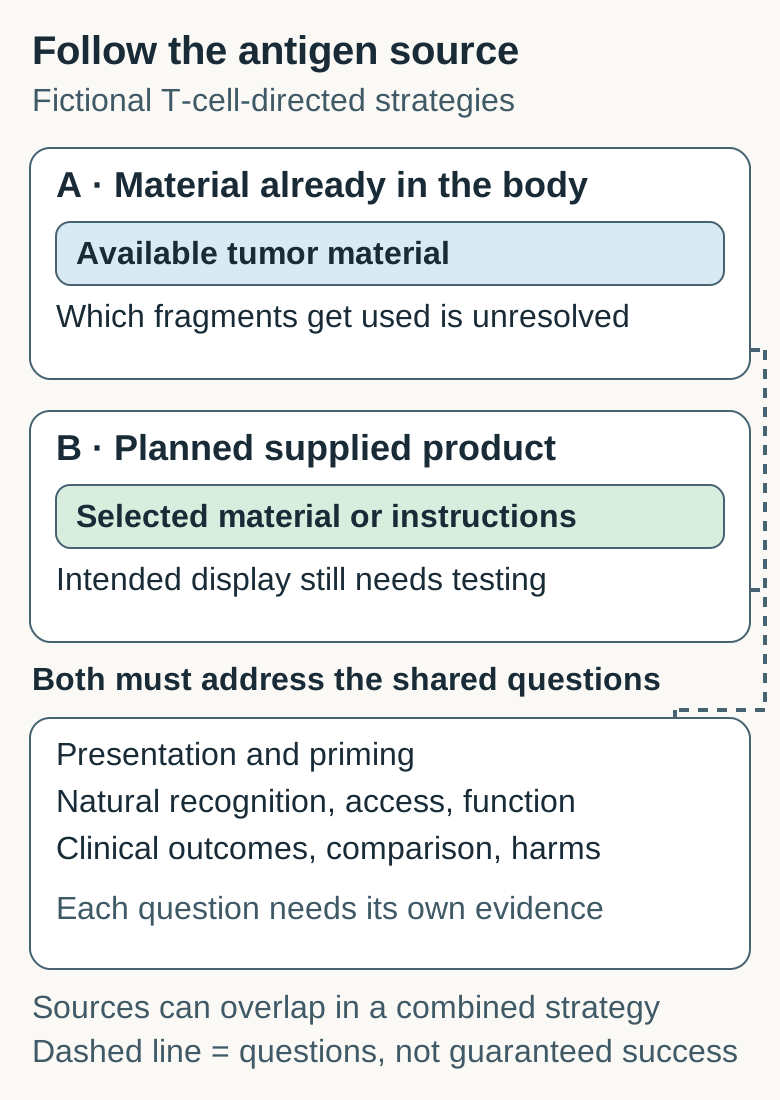
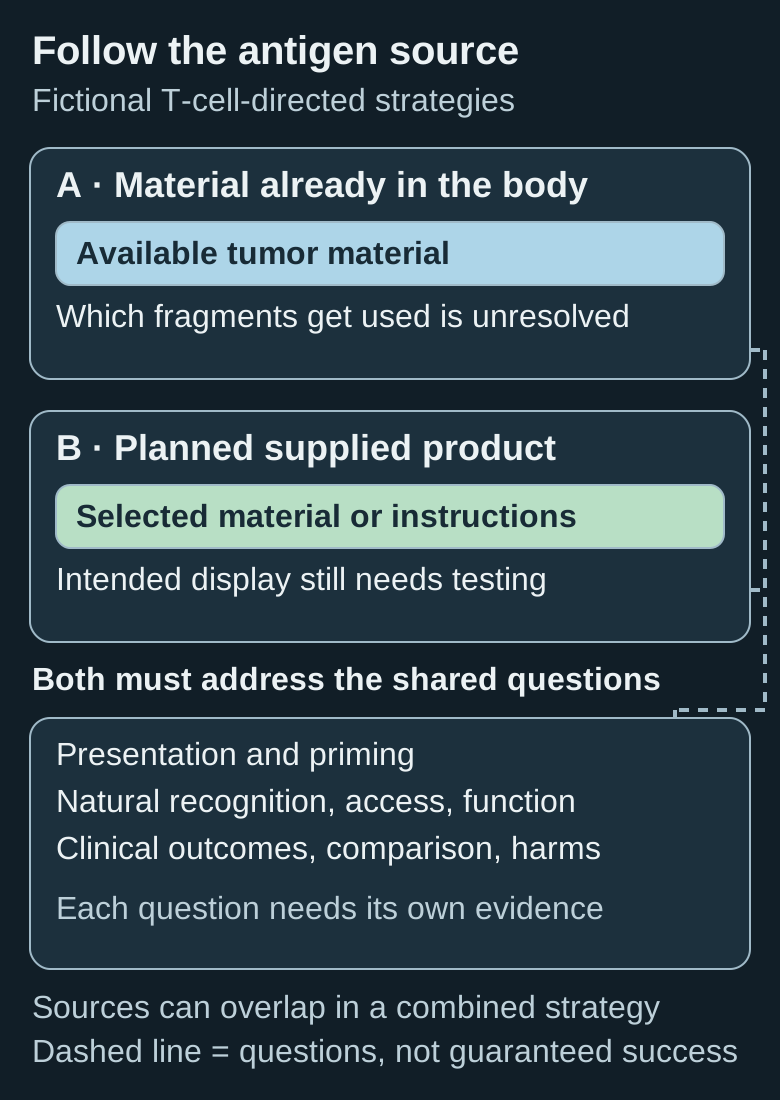
The source differs; the downstream questions still need evidence. Dashed connectors mean requirements to investigate, not guaranteed delivery, immune success or clinical benefit.
Compare the same questions
| Question | In-situ source strategy | Designed, supplied product |
|---|---|---|
| Where is the antigen material? | In available tumor tissue inside the body | In a supplied preparation or encoded instructions |
| What can be selected beforehand? | The site and intervention; usually less direct control over the full antigen mixture used | The product composition, with target-level control depending on platform |
| What is not guaranteed? | Which tumor fragments are taken up and presented | That supplied material becomes the intended naturally relevant display |
| What opportunity is needed? | Available tumor material; a lesion-based local method also needs a suitable accessible site | Material or information sufficient to make the specified product, plus its delivery requirements |
| What evidence is shared? | Appropriate presentation, priming, tumor access and useful function | Appropriate presentation, priming, tumor access and useful function |
| What outcome question remains? | What the complete strategy adds, including harms | What the complete strategy adds, including harms |
For T-cell-directed activity, human leukocyte antigen (HLA) presentation and suitable receptors matter. Cross-presentation lets a presenting cell display material taken up from another cell for certain T-cell responses. Priming on a presenting cell is different from later recognition of naturally presenting cancer cells. Even a primed population still needs access and capacity to function at relevant sites.
Which research question fits each strategy?
If the question is whether tumor material at a local site can support priming, test the in-situ source and its immune support. If the question is whether a planned antigen set provokes a response, a defined supplied product makes that set explicit. Neither question chooses a treatment or establishes a category-wide winner.
An inaccessible or absent identifiable lesion removes the opportunity for a proposed lesion-based source intervention. It does not, by itself, establish that another strategy is feasible, beneficial or suitable. Read the existing biological-opportunity and route lesson.
Common confusions
- Injection is vaccination. Injection describes a route; immune learning requires evidence.
- In-situ means personalized product. Using a person's tumor material differs from manufacturing a product selected for that person.
- The categories exclude one another. A study can supply selected antigen material and also use local tumor material. Source, platform, route and personalization are separate descriptors.
- Local shrinkage means distant immune control. Local, immune-assay, distant-site and clinical outcomes need separate measurements and attribution.
Try it: compare two source cards
Fictional workshop. Both cards propose a T-cell-directed strategy and have no outcome data.
- A: A local intervention uses material in an identified accessible tumor and supplies an immune stimulus. It does not supply a selected antigen product.
- B: A manufactured product supplies instructions encoding selected peptide targets. The targets were selected using sample-derived information before dosing.
What is supplied, what is available in the body, and what still needs testing?
Answer: A supplies the intervention and stimulus; its antigen source is the tumor material in the body. B supplies the selected antigen instructions; tumor-derived information informed the selection. B controls its encoded target set, but does not guarantee processing, HLA display or natural cancer-cell recognition. A does not fix which fragments will be presented. Both still need evidence of presentation and priming, then natural tumor recognition, access and useful function. A matched clinical question also needs a defined population, comparator, endpoint, follow-up and harms assessment.
Two changes to the cards: If A has no identifiable accessible tumor, its specified local opportunity is missing; that does not make B the right care choice. If B is added to A, report both antigen sources rather than forcing the combined strategy into one exclusive box. Neither change supplies outcome evidence.
For a different task, the injected-study exercise and answer show how a comparator isolates an intervention's added effect.
Explain it back
“The antigen source is ____. We control ____, but must still measure ____.”
For B: “the supplied encoded target set; product composition; appropriate display, response and clinical effect.”
Takeaway
Follow the antigen source first, then ask which immune and outcome claims were actually tested.
Related concepts
Use the vaccine overview for platform and personalization, and in-situ vaccination for presenting-cell dependencies.
Sources and scope
Source check: October 12, 2026. Brody and Hammerich primary abstracts were read; full-text attempts failed. Selected product-design and immune-assay passages in Ott's primary paper were read. These lymphoma and melanoma studies illustrate defined strategies in different settings; no efficacy ranking, breast-cancer benefit or eligibility is inferred. All workshop inputs are invented. Independent peer, expert and learner review pending.
- Brody et al., 2010: local radiation and an immune stimulus in low-grade B-cell lymphoma; in-body antigen-source example.
- Hammerich et al., 2019: a defined dendritic-cell recruitment/activation strategy in indolent lymphoma and mouse models. Mouse checkpoint-responsiveness findings are not human benefit estimates.
- Ott et al., 2017: selected manufactured long peptides in a phase I melanoma study; supplied-product example. Clinical observations do not compare the two categories.